Best Laptop for Writers in India (2026) | Primebook

Introduction
Writing itself is not a demanding computing task. The friction usually appears around it.
A working draft may sit beside several research tabs, PDFs, notes, email, source material and another document being referenced. Some writers need that setup for hours at a desk; others need to carry it between interviews, classrooms, cafés or client meetings. That makes screen space, keyboard comfort, document handling, battery life and multitasking more useful buying criteria than processor specifications alone.
AI has also changed the workflow around the draft. The useful question in 2026 is not whether a laptop can generate text, but whether it can reduce the repetitive work surrounding research, documents, files and communication while leaving the writer in control of the actual writing.
This guide looks at those workflows across the current Primebook laptop range, explains how PrimeOS supports them, and helps identify which Primebook fits different kinds of writing work.
What Has Changed for Writers Looking for Laptops in 2026?
The laptop market in 2026 is moving upmarket. Rising memory and storage costs are increasing PC prices, while manufacturers are directing more attention towards premium configurations and AI-focused machines. According to Gartner, worldwide PC shipments fell 22.4% year-on-year in Q3 2026, as higher component costs and a shift towards expensive configurations made lower-priced devices less accessible.
That creates an unusual situation for writers: the market is encouraging people to buy more computer at a time when writing itself has not become substantially more computationally demanding.
This does not mean specifications no longer matter. Writers who also edit videos, work with large design files or use resource-intensive professional software may have good reasons to invest in stronger hardware. But when those requirements are absent, additional processing power may deliver little practical value relative to its cost.
This makes the choice of operating system particularly consequential.
Windows offers extensive compatibility with traditional desktop software, including specialised professional applications. macOS combines a mature desktop ecosystem with tight hardware-software integration. ChromeOS places greater emphasis on browser-based and cloud-connected computing. PrimeOS takes a different approach by bringing together Android's extensive app ecosystem, desktop-style productivity, Linux applications, Windows software through PrimeX Cloud PC, and OS-level agentic AI through Prime Agent. Rather than treating AI as another standalone application, PrimeOS aims to make it part of the computing experience itself, helping users carry out tasks across their workflows.
A writer who depends on specialised Windows software running natively may have good reason to invest in a Windows laptop. But someone working primarily with browser-based tools, offline documents, Android apps and Linux applications such as LibreOffice, with agentic AI helping reduce routine manual work, may not need to spend as much on their computing setup.
That difference becomes more meaningful when viewed beyond the laptop purchase. Money not spent on unnecessary hardware could instead fund a writing course, professional certification or specialised training. For many writers, investing in their skills may deliver more value than investing in computing power or software capabilities they won't use.
Also Read: How to Automate Repetitive Tasks using AI in 2026
Why Primebook Laptops Offer Better Value for Indian Writers
Primebook challenges the idea that access to advanced computing capabilities must come with a premium price tag. For Indian writers navigating rising PC costs, its software-first approach offers a way to access a broader range of tools without making expensive hardware the starting point.
PrimeOS brings together everyday productivity through PrimeOffice, Android and Linux applications, and Windows software through PrimeX Cloud PC. But the more significant differentiator is PrimeAGNT, which brings agentic AI into the operating system, enabling it to carry out supported tasks across tabs and apps rather than simply generate responses.
Primebook's value proposition goes beyond economical hardware: it makes a versatile, agentic computing experience accessible to writers who might otherwise associate such capabilities with higher-priced machines.
How that translates into practical value becomes clearer when examining different writing workflows and the Primebook models best suited to them.
Also Read: Best Laptop for Students in India
How Primebook Laptops Fit Different Writing Workflows
1. Write Long-Form Without Breaking Focus
A thousand-word article and a 70,000-word manuscript have something in common: both demand sustained typing, often beyond regular working hours.
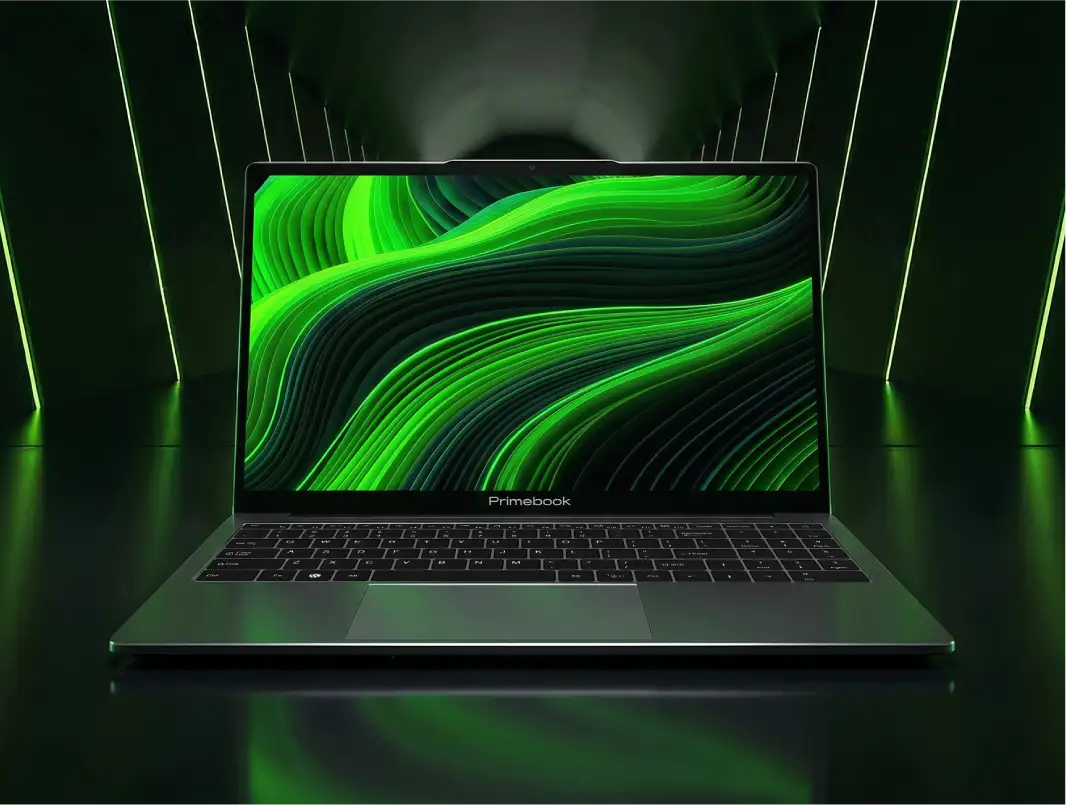
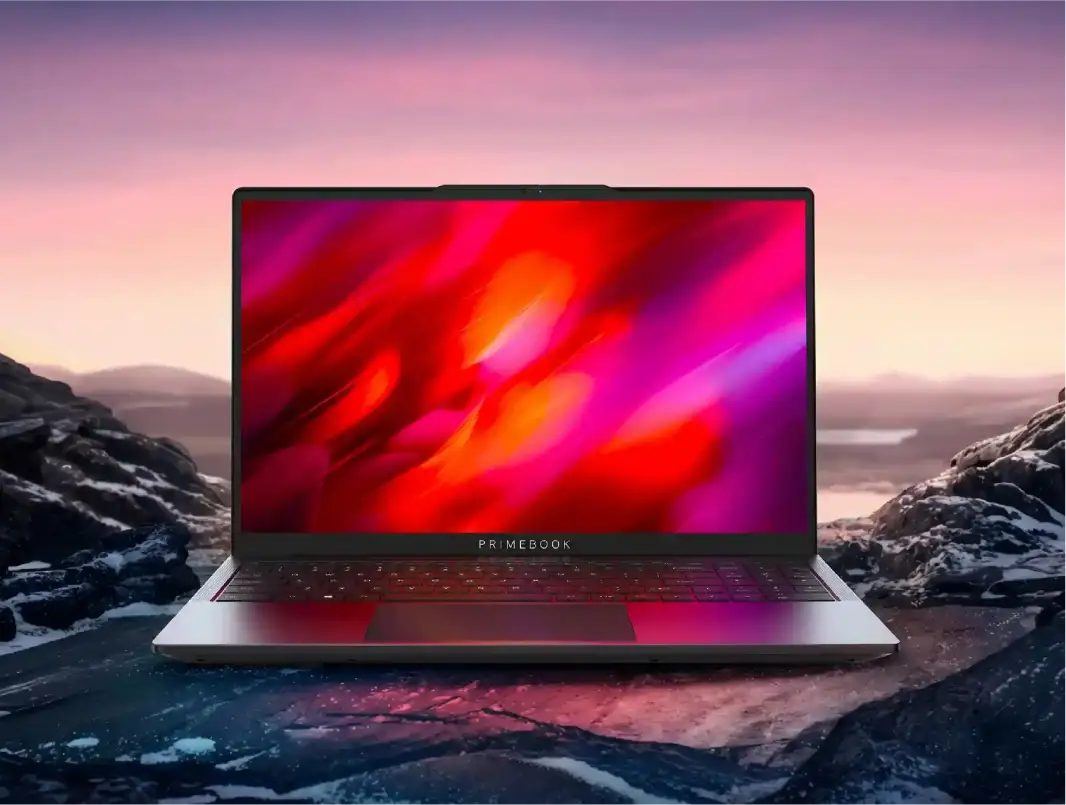
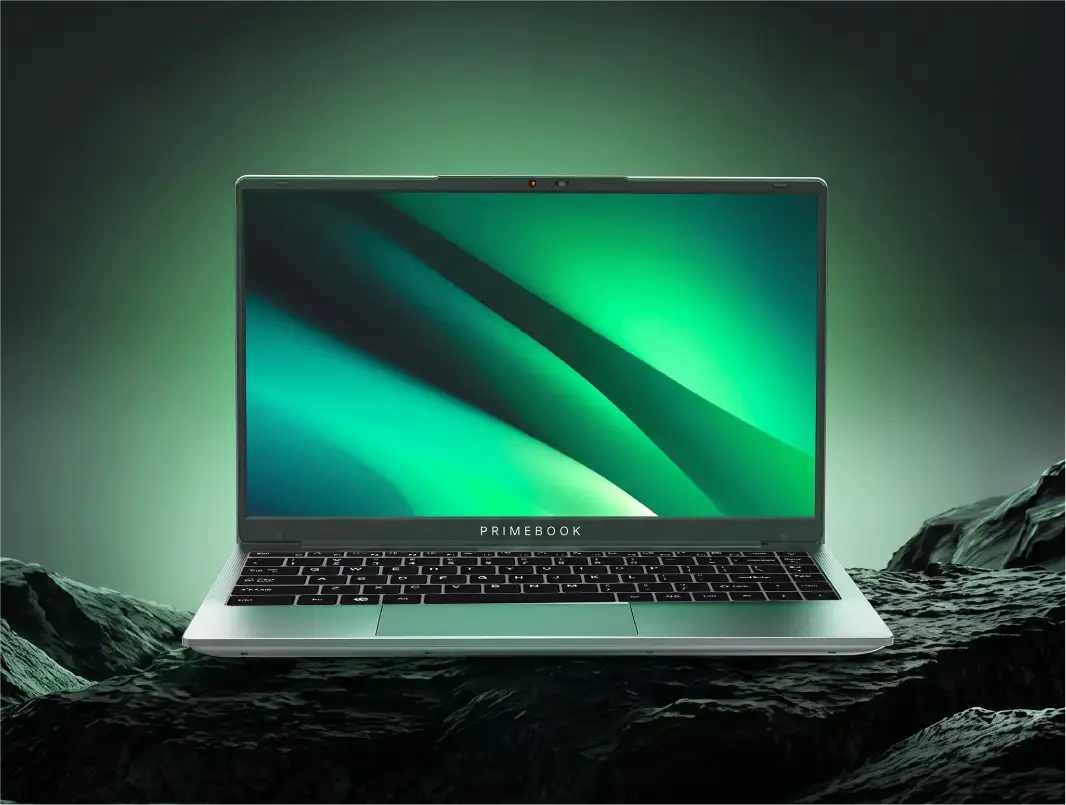
Primebook's well-spaced keyboards offer tactile feedback and responsive key travel, with backlighting on select models for low-light writing. Multi-gesture trackpads make navigating lengthy documents easier, while anti-glare IPS displays help minimise reflections during extended screen time.
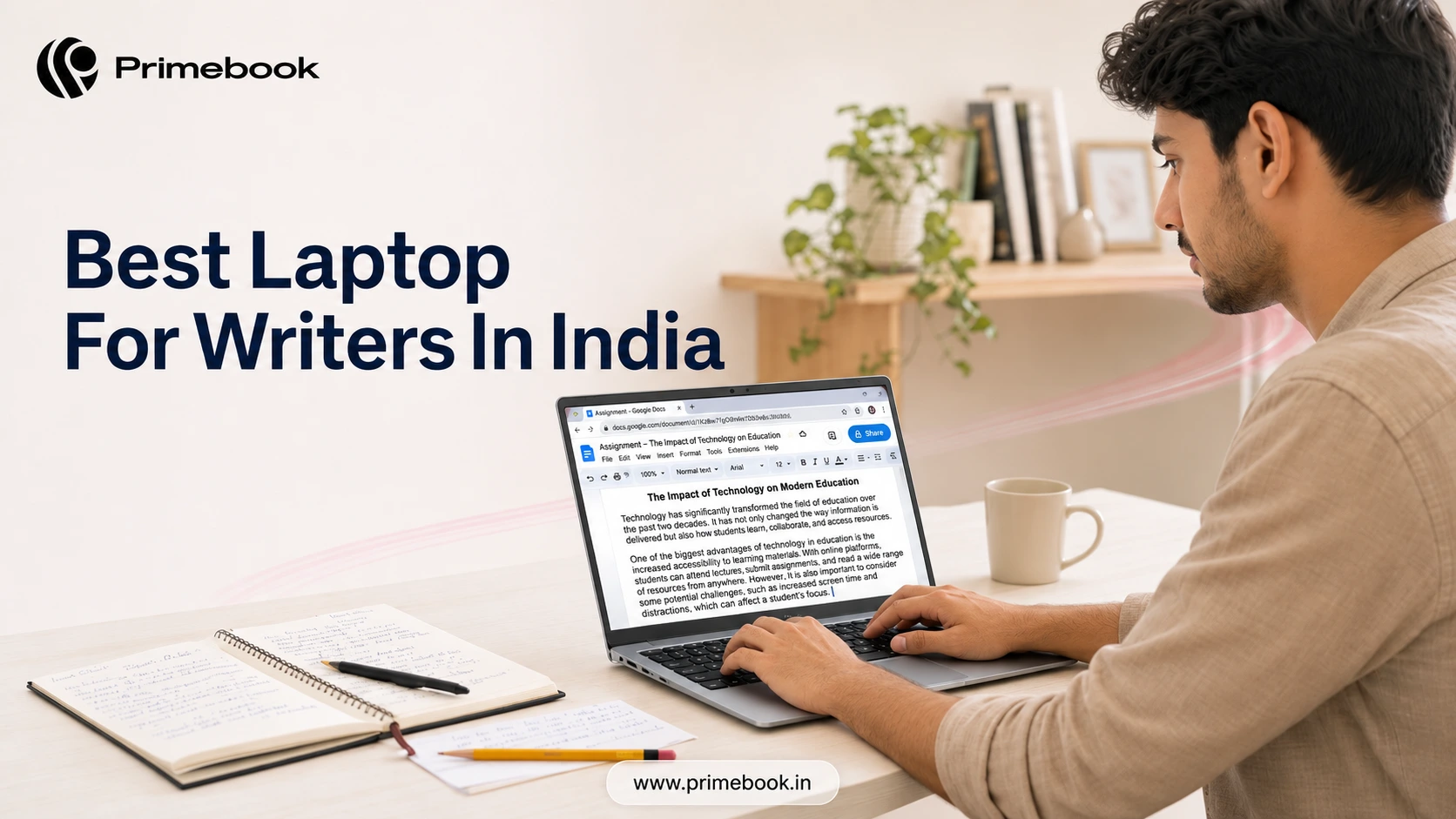
Dual-band Wi-Fi supports online access, but a disrupted connection needn't stop the writing. PrimeOffice's offline, ad-free suite includes PrimeDocs for creating and editing documents without internet access. With up to 14 hours of rated battery life on select models, writers can also work longer away from charging points.
Workflow Advantage: More control over where, when and how long a writing session continues.
2. Research While You Write
Research-heavy writing involves two distinct tasks: gathering information and deciding which evidence deserves a place in the final draft. Managing the first shouldn't distract from the second.
PrimeOS Snap Assist keeps research sources and drafts visible in resizable, side-by-side windows, allowing writers to check quotations, statistics and findings against their original context before incorporating them. Clipboard Manager retains copied excerpts and links for quick retrieval, while PrimeAGNT can help open reference websites from a research brief, saving writers the effort of navigating to each source manually.
Workflow Advantage: Less time retracing research steps, more attention to editorial judgment.
3. Draft Scripts, Poems or Ideas on the Go
Some of the most interesting writing ideas emerge from ordinary moments, often when there's no intention to write. A screenplay idea might come from an overheard conversation on a bus, a poem from an unexpected observation on the street, or a fictional character from noticing someone's peculiar behaviour during a metro ride.
PrimeOS's Android app ecosystem helps capture those moments before their details fade. Writers can use JotterPad to develop dialogue into scripts using Fountain formatting, Mindly to map character relationships and plot connections, or Notion to organise scattered ideas into evolving story outlines.
Workflow Advantage: Freedom to explore different forms of creative writing, wherever inspiration strikes.
4. Edit and Proofread with More Precision
A draft can be grammatically correct and still miss the mark. A copywriter may need to align messaging with a client's brief, while an SEO content writer must review keyword placement, H1–H3 hierarchy, search intent and whether the content adequately answers readers' questions.
PrimeBrowser supports the Grammarly extension for language corrections, while Android apps like Google Docs enable collaborative revisions. Browser-based tools such as Semrush help assess SEO requirements, and LLMs like ChatGPT can challenge weak arguments, identify inconsistencies and suggest alternative phrasing. Writers exploring compatible on-device AI editing tools can also benefit from dedicated NPU acceleration available on select latest-generation Primebook models.
Workflow Advantage: Make informed editing decisions when language, client expectations and search requirements demand different approaches.
5. Turn Interviews and Conversations Into Written Stories
An hour-long interview can contain only a few minutes of material that eventually makes it into an article. The challenge is identifying those valuable moments without losing the speaker's original meaning.
Primebook's dual noise-cancelling microphones help capture clear speech during interviews, while Android apps like Otter.ai and Transkriptor, available through the Prime App Store, help convert conversations into transcripts. Writers can also use TurboScribe through PrimeBrowser to transcribe recorded interviews before reviewing quotations and developing articles, profiles or documentary scripts in PrimeDocs.
Alternatively, writers can ask PrimeAGNT to handle transcription in the background through its AI Workspace while they continue working on other tasks. However, the resulting transcript should be checked against the original audio, particularly for colloquial expressions, unfamiliar accents and technical terminology.
Workflow Advantage: Spend less time replaying recordings and more time uncovering the story within a conversation.
6. Manage Multiple Writing Assignments
For a freelance writer, three assignments rarely move at the same pace. One article may be awaiting client approval, another approaching its deadline, while a third returns with revisions. The difficulty is knowing which commitment needs action rather than simply remembering every deadline.
PrimeOffice's PrimeSheet helps maintain an editorial tracker with assignment statuses, submission dates and pending revisions. If a submitted article is awaiting feedback, writers can use PrimeAGNT to help draft a follow-up email requesting an update, rather than preparing every communication manually.
Workflow Advantage: Prioritise the right assignments at the right time, without losing track of client commitments.
Also Read: Best Note-Taking Apps to Use on Primebook
Which Primebook Laptop Is Best for Different Types of Writers?
Not every writer needs the same laptop configuration. A travel journalist may prioritise portability, while an investigative journalist handling extensive source material may benefit from a larger display. The right Primebook depends on which hardware differences matter most to the work.
Note: The underlying PrimeOS experience and core productivity capabilities remain largely consistent across the Primebook range. The primary differences lie in hardware specifications, form factors and certain model-specific capabilities, rather than fundamentally different computing experiences.
Also Read: Primebook 2 Max Review by Mashable
Conclusion
The writing profession is evolving beyond the traditional roles of authors, journalists and copywriters. AI content editors now refine machine-generated drafts, while AI generalists and response evaluators assess LLM outputs for accuracy, reasoning, relevance and quality. These emerging roles demand skills and workflows that were barely part of a writer's job description a few years ago.
And the transition is unlikely to stop here. As AI becomes more deeply integrated into publishing, research and content production, writers may find themselves working with tools and responsibilities that don't yet exist.
A laptop that suits a writer today should not become a limitation when their work evolves tomorrow. That makes a flexible, versatile computing environment increasingly valuable, one that can accommodate new applications, different software ecosystems and changing ways of working.
This is the direction Primebook is pursuing through PrimeOS: a computing experience designed to evolve alongside the people using it, rather than confining them to a fixed set of tools or workflows.
Editorial Transparency: This article is published by Primebook, which manufactures and sells the laptops discussed in this guide. The content was researched and reviewed by Primebook's editorial team using current product documentation, official information from relevant technology providers, independent third-party reviews and industry research on the evolving PC market and writing profession.
Primebook uses agentic AI as part of its editorial workflow to help surface, organise and cross-reference source material, and assist with content structuring and draft refinement. This supports the team's research and editing process without replacing human editorial judgment. Material factual claims, technical specifications and cited sources are checked by human editors before publication, with final recommendations and editorial decisions remaining with Primebook's team.
Because writing requirements vary considerably between professions, this guide examines practical writing workflows separately from model-specific hardware recommendations. Product capabilities are discussed in relation to their intended uses, while manufacturer-rated specifications, including battery life, may differ under real-world conditions.
The purpose of this guide is to help Indian writers understand which computing capabilities are relevant to their work and make informed decisions when choosing a laptop.